
Every appointment, every branch, on one diary.
Your customers book themselves — on your own website, at your counter, or by phone. Your front desk sees one diary, your staff see their own day, and the end of the month knows who earned what.
If your business sells time, this is the diary for it.
A barber books thirty minutes. A dentist books a room and a chair. A garage books a bay and a mechanic. The engine underneath is the same — what changes is what you call the things and who is allowed to do them.
By person, by service
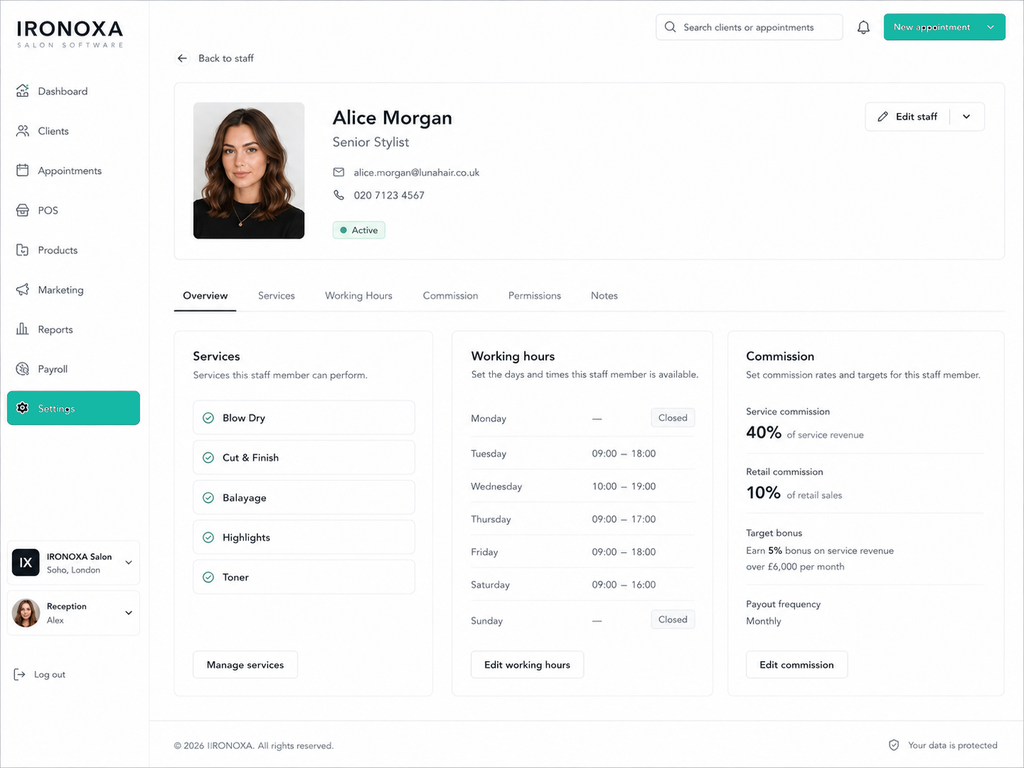
Each stylist has their own services, hours and days off. Walk-ins and bookings share one diary, and commission is worked out from what was actually sold.
Practitioner and room
Book the person and the room together, hold longer slots for longer treatments, and keep a clear history against each patient.
Long bookings, deposits
Multi-hour sessions, several services back to back, and a deposit taken at the time of booking so a no-show costs somebody something.
Whoever is qualified
Garages, vets, tutors, trainers, consultants. Anyone who has to be free, and qualified, and in the right place before a slot can be offered.
The diary is a paper book, the bookings are in three phones, and payday is an argument.
Double bookings
Someone writes a name in a slot that was taken online ten minutes ago. Two customers, one chair, and both of them are right.
The phone rings all day
Every booking costs somebody five minutes and their attention, at the exact moment they should be with the customer in front of them.
No-shows cost nothing
Nobody is reminded, nothing is held, and an empty hour is only noticed when it has already gone.
Commission is a spreadsheet
Who did what, at which branch, for how much — reconstructed at month end from memory and a paper diary.
Built and supported by us, not resold.
The same platform runs the front desk, the booking site your customers use, the screen facing them at the counter and the report you pay people from — so there is one company to call when something needs fixing.
The front desk
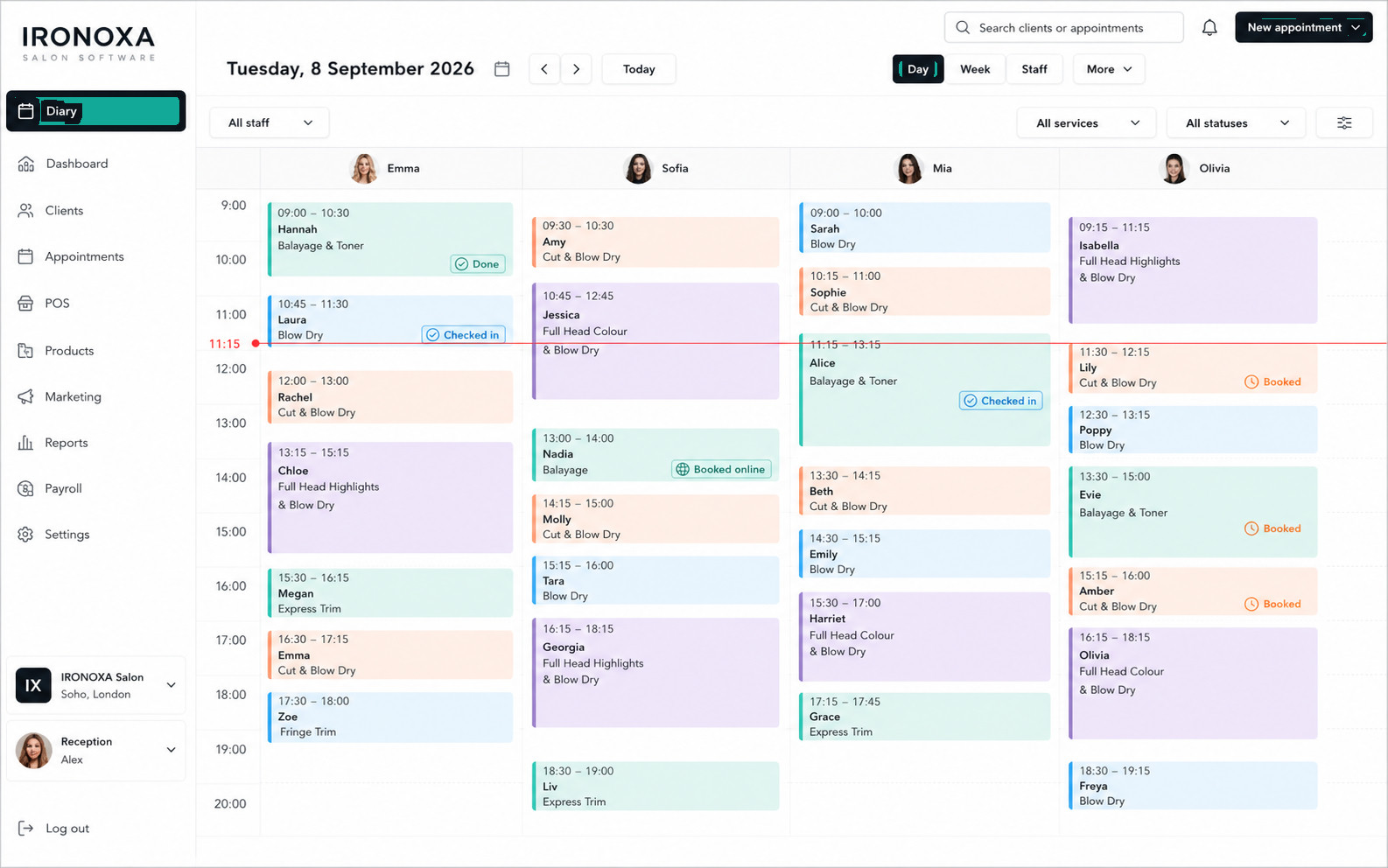
One diary for the whole day: book, move, cancel, mark a no-show, check somebody in, and ring the whole thing up without typing it twice.
- Drag a booking to a new time or a different person
- Walk-ins go straight on the diary, or straight on a ticket
- The booking becomes the sale — services already priced
- Keeps working when the line drops, and catches up after
Staff, hours and pay
Who does what, when they work, when they are off — and what each of them earned by the end of the day.
- Services per person, so nobody is offered work they don't do
- Working hours, breaks and time off per branch
- Commission on services, not on the shampoo they sold with it
Slots that are actually free
A time is only offered when the person is on shift, not on a break, not on leave, and not already booked — worked out on the server, so the website and the desk can never disagree.
One list of services
Names, prices and how long each takes, set once and used by the website, the desk and the customer screen alike. Per-branch prices where you need them.
Reminders and deposits
Confirmations when they book, a reminder before they come, and the option to hold a card so an empty chair is not free.
Everything that is happening today, on one screen.
Bookings from the website, from the counter and from the phone all land on the same diary, in the same colour, with the same rules. There is no second list to check.
- See one person's day, or the whole floor at once
- Check somebody in the moment they walk through the door
- Move a booking and the customer is told
- Free time is visible, so the phone can fill it
Illustrative. One stylist's column — the desk sees every column side by side.
Your customers book themselves, under your own name.
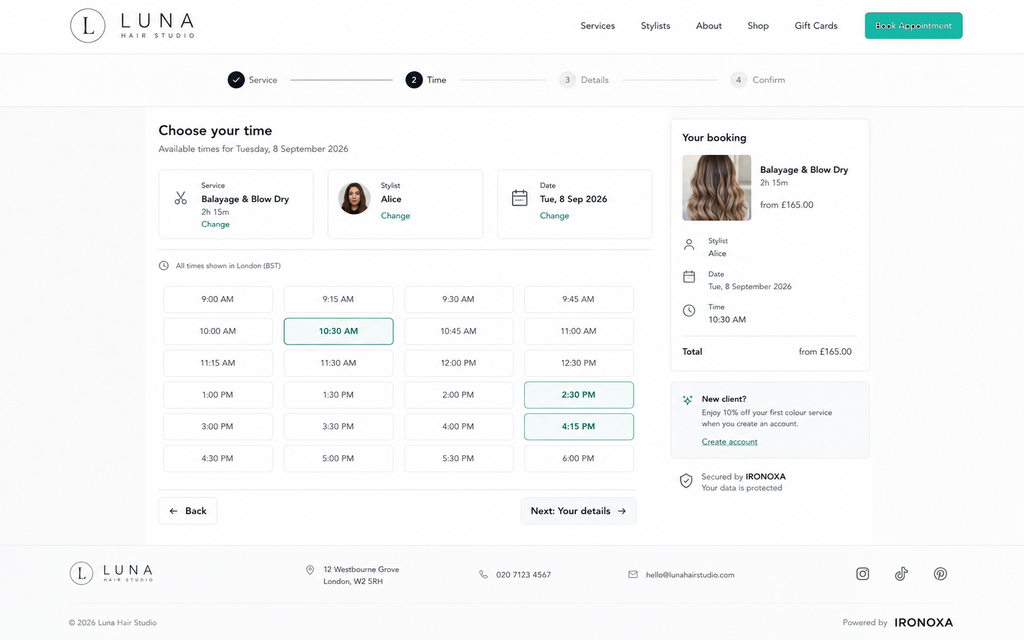
Not a marketplace, not a listing site, and no commission to anybody. The booking page is yours, on your domain, and every booking made on it lands on the same diary as the ones taken at the counter.
Your own booking website
LivePick a service, pick a day, pick a time that is genuinely free, and confirm. Your branding, your domain, your customers — and a deposit taken at the time of booking if you want one.
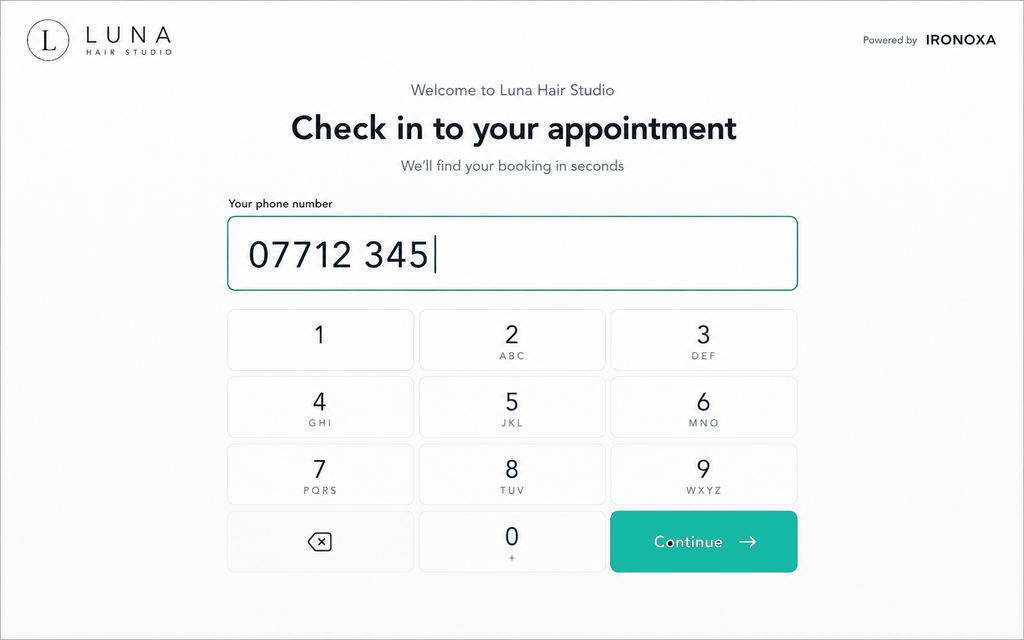
The screen at your counter
LiveA customer-facing screen that checks people in when they arrive, lets a walk-in book themselves, and offers the same again after they have paid.
The desk and the phone
LiveSomebody calls, the desk takes it, and it is on the same diary before the call ends — with the same rules about who is free.
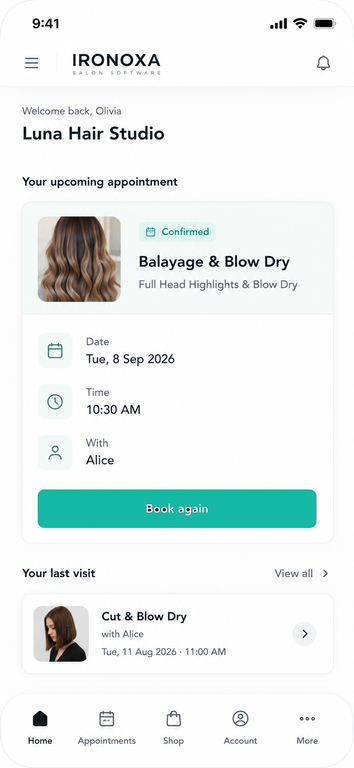
Your customers' mobile app
LiveAn app under your own name: their next appointment, one tap to book again, and the reminder in their pocket rather than their inbox. On iPhone and Android.
The screen facing your customer does more than show a total.
They check themselves in on arrival, so the desk knows they are here without being told. A walk-in with no appointment can book one there and then. And when they have paid, it asks whether they would like the same again — while they are still standing in front of you, which is the only moment they will ever say yes.
- Check in with a phone number — no name to spell, no queue
- Book from scratch: service, day, who with, time
- "Book again?" after paying, with what they just had already chosen
- Clears itself, so nobody's number is left facing the shop
An app with your name on it, not ours.
Their next appointment, the address, and one tap to book the same again. Reminders arrive as a notification instead of an email nobody opens — which is the cheapest way there is to stop a no-show.
- Published under your own name, on iPhone and Android
- The same slots the desk sees — no separate availability to keep
- Their history, so booking the usual is one tap
- A booking made in the app is on the diary before they put the phone down
Payday stops being an argument.
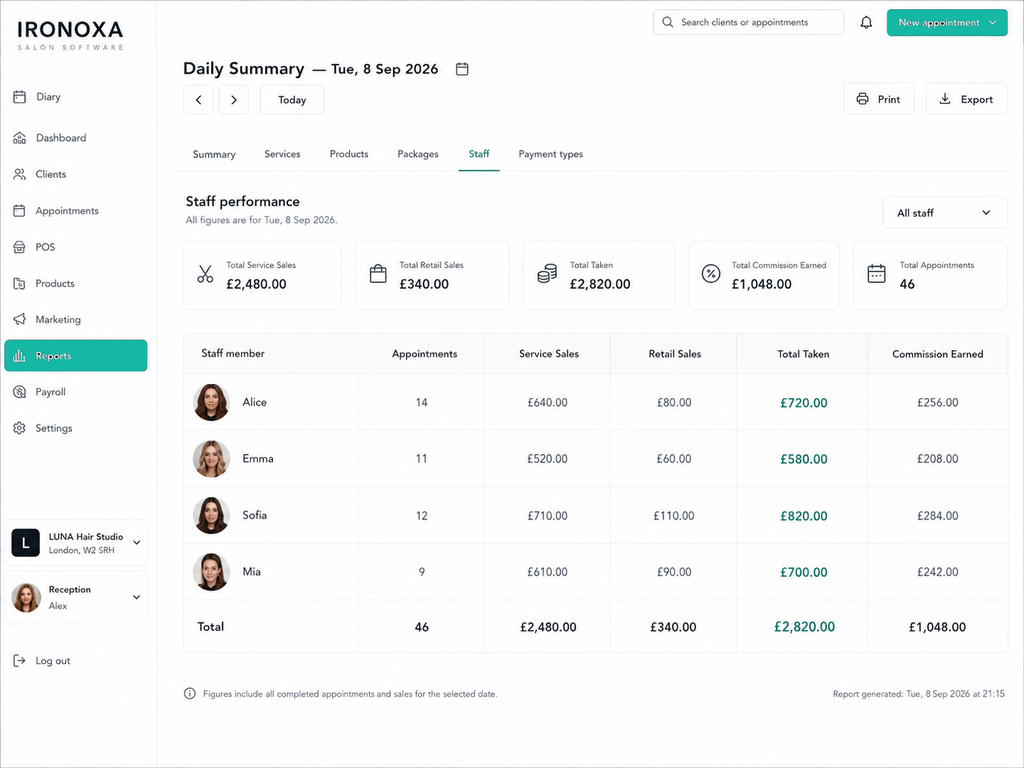
Every ticket records who did the work. At the end of the day, the closing report says what each person took and what each person earned — from the sales themselves, not from a paper diary reconstructed a fortnight later.
- Commission on the service, not on the product sold alongside it
- Walk-ins credited to whoever actually did them
- Per person, per branch, per shift
- The same figures the till closed on, so they reconcile
Open the second location without splitting the diary.
Each branch keeps its own opening hours, its own staff and its own bookings — including its own timezone, because a group does not always stay in one country.
Its own day
Opening hours, staff on shift, and how early somebody may check in — set per location, not once for everybody.
Its own roster
Working hours and time off follow the person at the branch they work in, and the diary refuses a slot they cannot cover.
One back office
Compare branches side by side or drill into one, with staff and takings rolling up into the same reports.
Its own clock
Each branch runs on its own local time, so a booking made at head office is the time the customer will actually turn up.
See it with your own services in it.
Thirty minutes, your treatments, your staff, your questions. We will set up your services, show you a customer booking themselves, and give you a straight answer on cost and on moving off whatever you use now.